The real enemy of morning puffiness has been identified
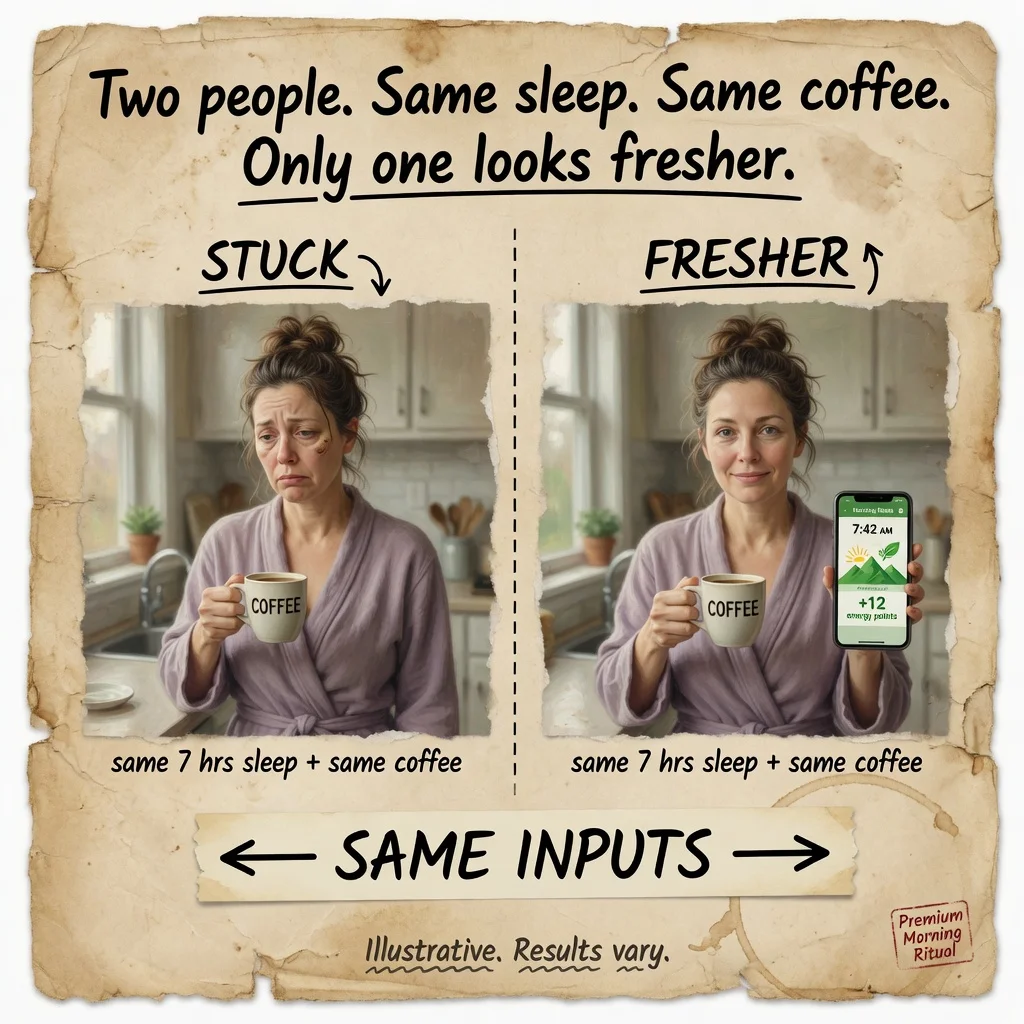
Same sleep. Same coffee. Only one looks fresher.
You can do 'everything right' and still wake up puffy. The difference is not more effort. It is one morning input almost nobody treats as the job: moving the whole body after hours of stillness.
I slept. I drank water. I still looked in the mirror and thought: why do I look swollen again?
If that sentence lives in your head most mornings, you already know the next part of the script. More coffee. Maybe a face roller. A promise to 'work out later.' Seventeen saved videos you will not open before drop-off.
Here is the frustration that keeps people stuck: it feels like you are doing everything right and still failing. Sleep tracked. Water drank. Skincare done. Face still soft. Body still parked.
That gap, same effort, bad outcome, is not proof you are lazy. It is proof the fixes you were sold never addressed the actual condition of the night: your body barely moved for seven or eight hours.
Sound familiar?
- Face or jaw looks fuller than it did at bedtime, even after 'good' sleep
- Under-eyes and cheeks feel soft or puffy before the day starts
- Coffee wakes your brain while your body still feels glued
- Rollers and creams help for five minutes, then disappear from the routine
- You have tried hard workouts and still cannot start them on a low-energy morning
77 randomized trials
Tai Chi and qigong-style gentle practice has been tested in clinical research. Reviews found signals for physical function, balance, and quality of life , a movement idea with a real paper trail, not a miracle claim.
Secure web checkout | iPhone required | Cancel online
Your body barely moved for hours.
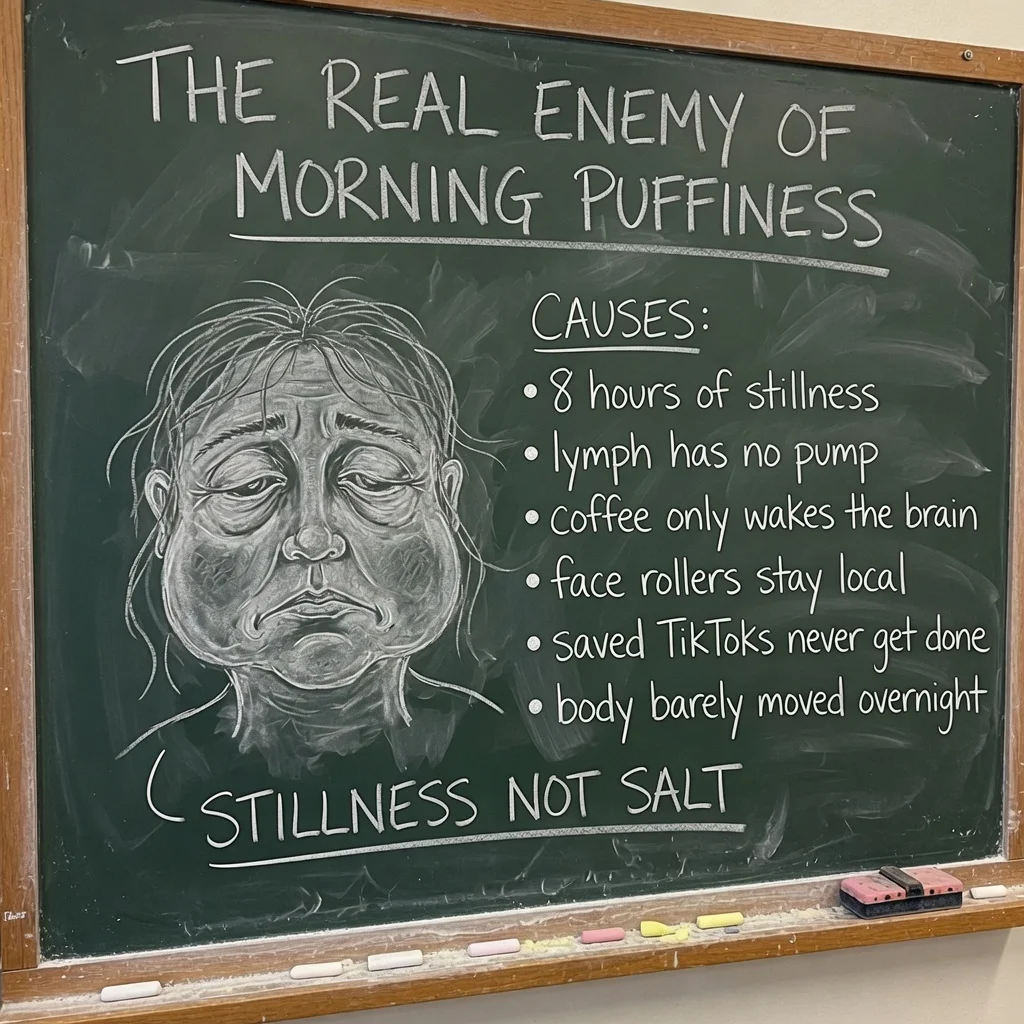
Unlike blood, your lymphatic system does not have a central pump like the heart. Muscle movement is one of the main ways that fluid gets a nudge. Health educators say this plainly: lymph relies on body movement.
So when you lie still all night, you are not failing a diet. You are waking up after hours without the physical signal your system uses to keep things moving. Of course the face and body can feel stuck.
Coffee does not fix that. Face tools do not fix that. A hard workout might, if you actually do it at 6:45 a.m. Most mornings, what you need is not more willpower. You need a short standing sequence you can finish before the day starts.
Two people can sleep the same and drink the same coffee. Only one of them moves her whole body for a few minutes. That one difference is the gap most morning advice never names.
Most morning products treat puffiness like a face-only problem. The night was full-body stillness. A roller on your jaw cannot do the job of waking shoulders, trunk, arms, and legs.
Lymph has no central pump
Unlike blood, lymph relies on body movement to circulate. Overnight you barely moved. Of course the face and body can feel stuck in the morning , that is physics, not a character flaw.
A complete morning sequence, not another tip.
Morning Qi is a guided standing flow on your iPhone: seven movements in order, timed so you do not invent the routine while half-asleep. Soft bounce, body wave, arm swings, twists, release, finish. Most sessions land in 3-7 minutes. That is the full-body input coffee never supplied.
Face-only fixes soothe one area. A standing sequence gives your whole body a reason to move after hours of stillness.
Start the 20-day challenge →Why the usual fixes miss the root
These are not bad habits. They just do not solve overnight stillness.
Wakes the brain. Does almost nothing for fluid and stiffness that built while you were still. Same coffee, different body outcome if only one person moved.
Feel nice on one area. Stay local. They never move trunk, legs, or arms, and they are easy to drop by midweek.
Temporary surface comfort. If the root is lack of whole-body motion, a cream cannot finish the job.
Useful when you train. On a puffy, low-energy morning, getting changed can be enough to put it off. This is for the window before the day starts, not a gym session.
Easy to collect. No timer, no order, no clear finish. You decide what comes next while still half-asleep, so most mornings nothing happens.
Balance, mood, quality of life
A major evidence overview ties Tai Chi practice to improvements across thousands of people. Morning Qi turns that gentle-movement idea into a short morning reset you can finish before the day starts.
Open the app. Follow the timer. Stop when it ends.
Prop up your phone. Press start. The sequence is already decided, so tomorrow does not require a new plan.
- 3, 5, or 7 minute guided sessions
- Seven standing movements in a fixed order
- Optional on-device movement feedback
- A 20-day trail so you can see what you finished
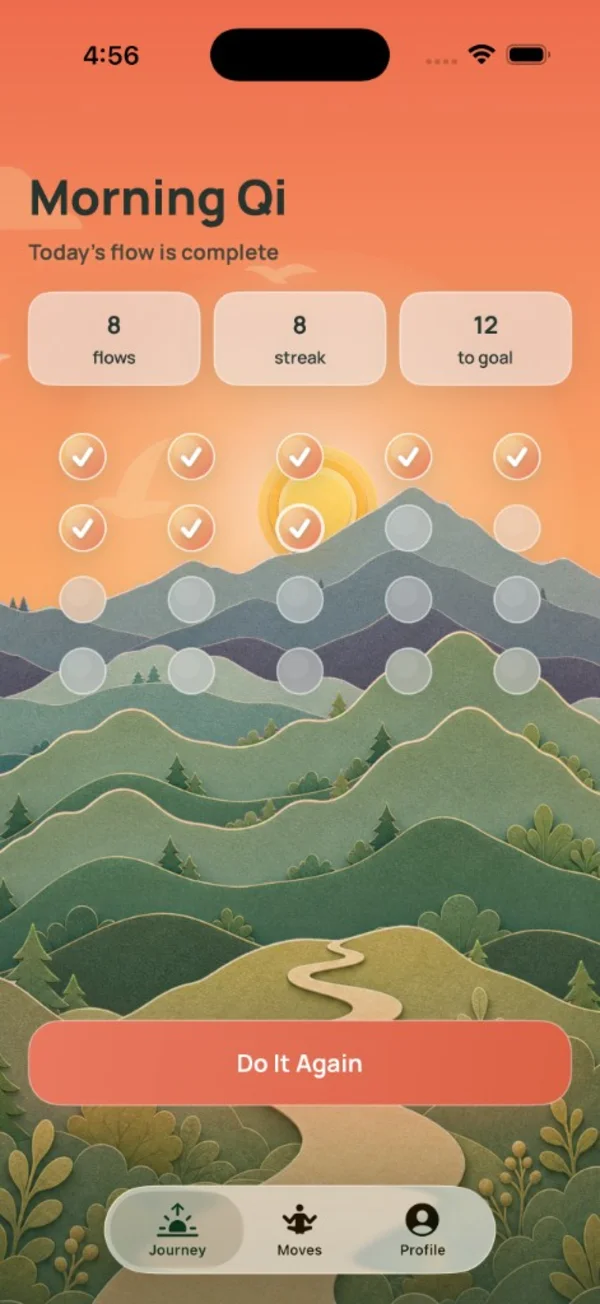
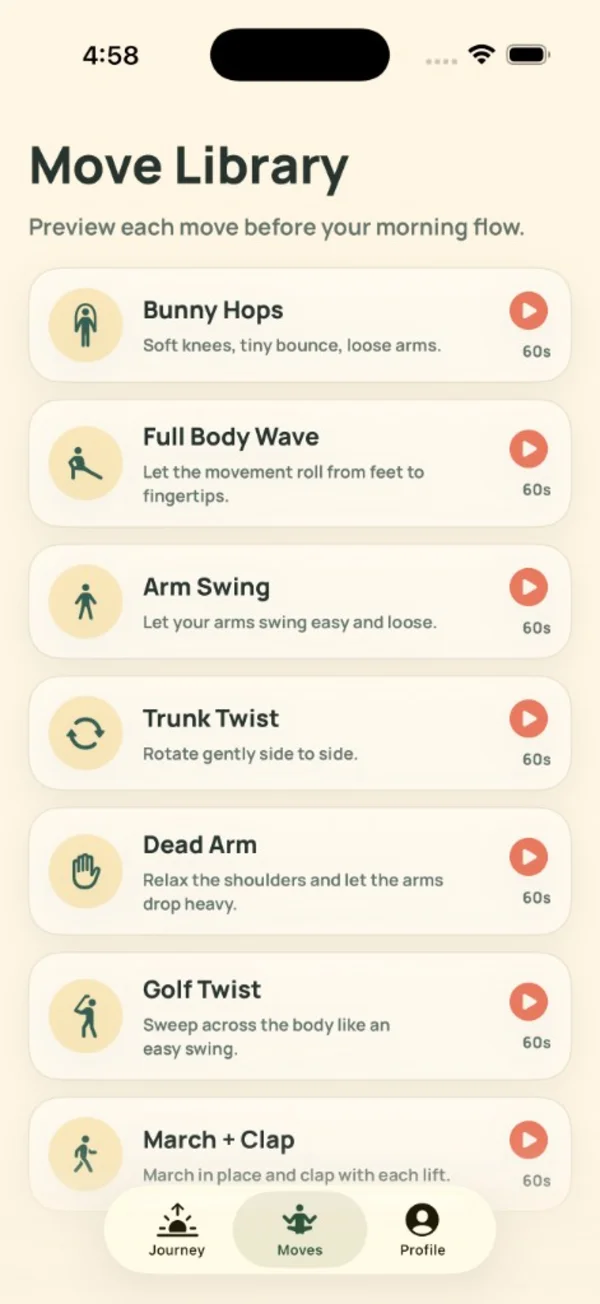
Camera feedback is optional and designed to process on your iPhone.
Start the 20-day challenge →The seven movements (the complete sequence)
Miss a step and you are back to random stretches. The app keeps the order so you do not invent a routine at 6:45 a.m.
- 01 Bunny Hops , Tiny bounce
- 02 Body Wave , Feet to fingertips
- 03 Arm Swing , Loose and easy
- 04 Trunk Twist , Side to side
- 05 Dead Arm , Release shoulders
- 06 Golf Twist , Sweep across
- 07 March + Clap , Finish awake
Twenty mornings is a finish line you can see from day one.
One short standing reset each morning, tracked as you go. You always know what counts as done, and Day 20 is a real end point, not another vague habit you restart every Monday.
- Day 1. You finish one short flow. The win is showing up, not a perfect face.
- Days 3-7. Less bargaining. You already know what 'done' looks like. Coffee can stay; your body finally got a full-body morning input.
- Days 10-20. The trail fills in. Many women notice mornings that feel less stuck and easier to start. Results vary.
What women are aiming for
A face that feels more awake, after a short standing reset.
Illustrative of the feeling many women want from a gentle morning routine. Results vary. Not a medical treatment.
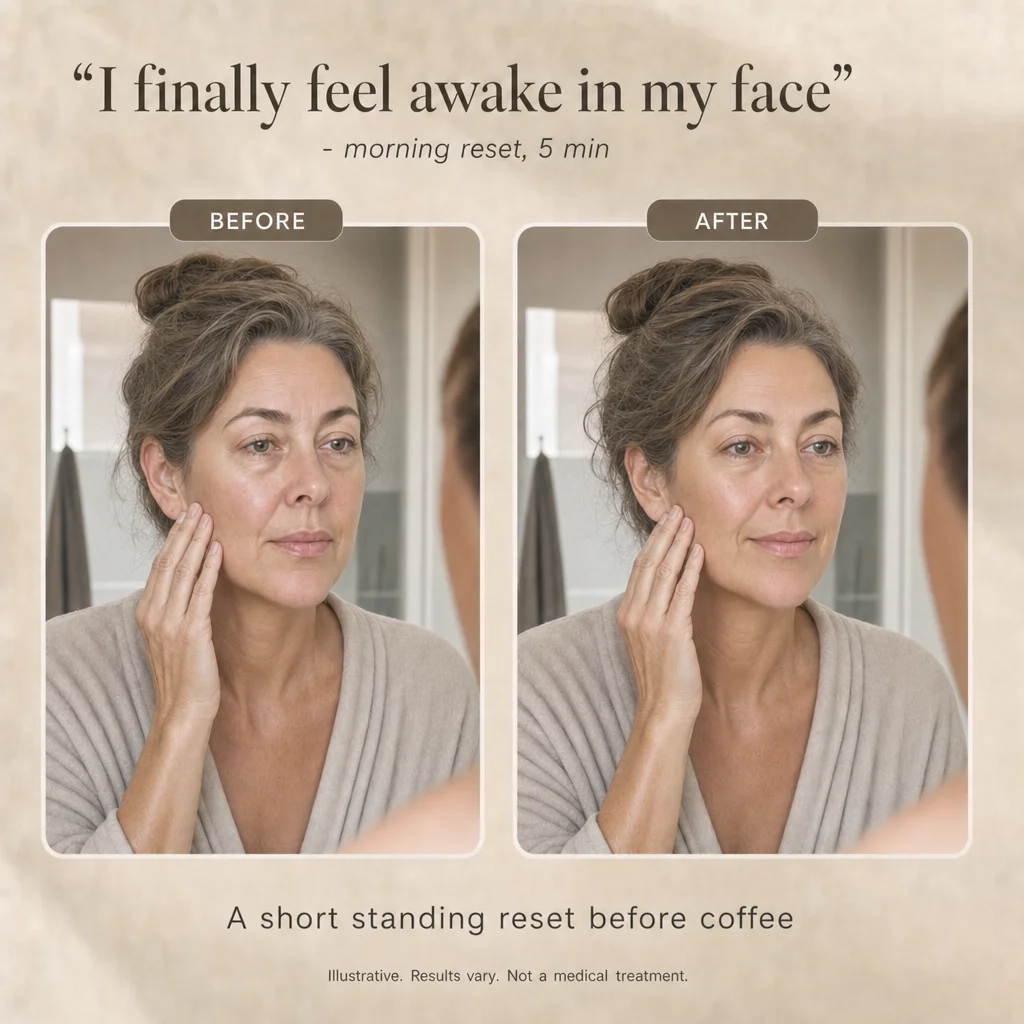
Same sleep. Same coffee. Different morning input.
You can sleep, drink water, and still look stuck , if your body never got a full-body nudge after hours of stillness. The difference is not always more effort. Often it is whether you moved before the day took over.
What the research supports
Gentle movement is not a made-up internet trend. Tai Chi and qigong-style practice have been studied for years:
Lymph needs motion
Unlike blood, lymph has no central pump. Muscle movement helps that fluid circulate. Overnight stillness is the setup; a short standing sequence is one practical response.
77 randomized trials
A major review of Tai Chi and qigong trials found signals for physical function, balance, and quality of life from these gentle practices.
Balance, mood, and quality of life
Broader evidence overviews associate Tai Chi with balance, mood, and quality-of-life outcomes. Morning Qi turns that idea into a short daily reset you can actually finish.
Morning Qi is general wellness guidance, not medical treatment. Research links are for education , not a promise that the app cures puffiness or any condition.
Start the 20-day challenge →One morning. Seven minutes or less. A trail you can finish.
Subscribe on the web. Download Morning Qi on your iPhone. Redeem access. Tomorrow's sequence is already waiting, so you are not the person doing everything right and still stuck with zero full-body input.
Start the 20-day challenge →Secure RevenueCat checkout | Access redeemed in Morning Qi
Before you begin
Is this a workout?
No. It is a gentle standing wellness routine, shorter and less intense than training.
Do I need an iPhone?
Yes. Subscribe on the web, then download and redeem on iPhone.
Will this treat lymphedema or medical swelling?
No. Morning Qi is general wellness movement guidance, not diagnosis or treatment. See a clinician for medical concerns.
Is camera required?
Optional. When used, pose processing is designed to stay on-device.
Can I cancel?
Yes. Terms and cancellation are shown in the secure web checkout.